

177. Olaf Scholz: Putin, Power, and Far-Right Populism
23 February 2026


Post
6 March 2022
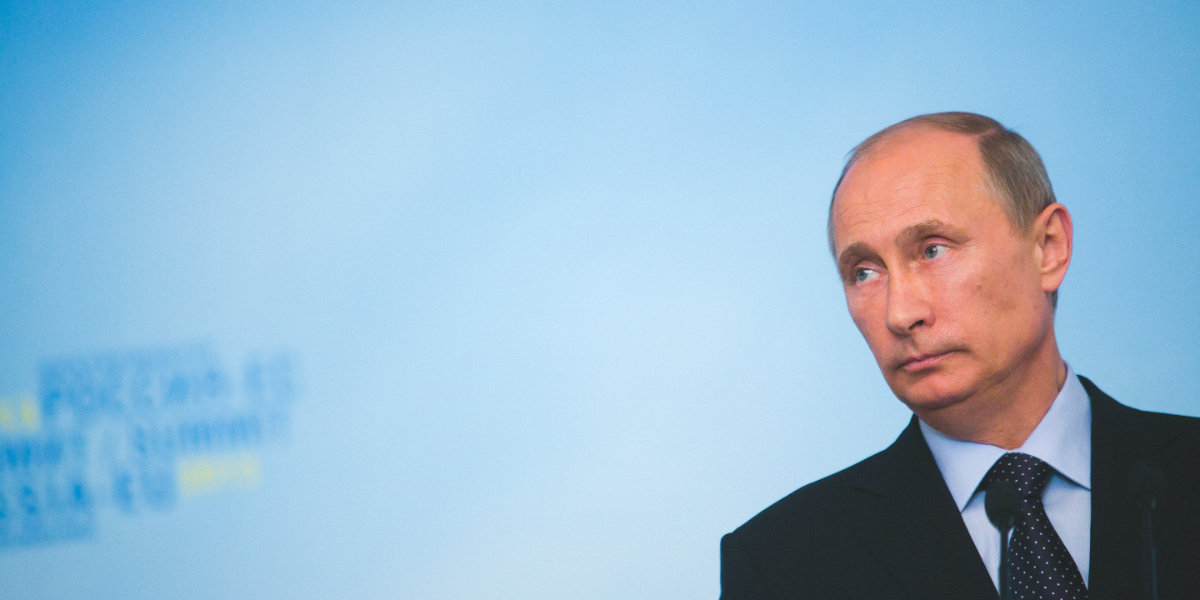
I am indebted to my friend Edi Rama, Prime Minister of Albania, for alerting me to the possible influence of a man named Lev Gumilev in shaping the thinking and actions of Vladimir Putin.
Gumilev was born and died in St Petersburg, Putin's home town. The son of two of Russia’s most famous poets, Nikolai Gumilev and Anna Akhmatova, he is most commonly described as a historian and ethnographer.
You've heard no doubt of glasnost, the openness and transparency that Mikhail Gorbachev, 91 last week, saw as essential to the modern Russia he wanted to build, and which Putin blames in part for the loss of the Cold War and the break-up of the Soviet Union. Gumilev was an exponent of another -nost, the belief that every people possesses a distinct life force: a “bio-cosmic” inner energy or passionate substance that he calls passionarnost. Before you dismiss it as crazy stuff, bear with me, because Putin is a devotee.
Gumilev's theory was that every ethnic group passes through the same stages of birth, development, climax, inertia, convolution and memorial. Putin may have known Gumilev, who died in 1992, at the start of the 1990s. He has certainly embraced his ideas and often refers to them. In February last year, he said: “I believe in passionarnost. In nature as in society, there is development, climax and decline. Russia has not yet attained its highest point. We are on the way ... We possess an infinite genetic code."
Gumilev believed that when passionarnost was at its height - climax - great conquests were possible and should be made. He viewed the Europe of the late last century as inert, whereas the Arabic world, he believed, was beginning to show the passionarnost Europe lacked.
Edi Rama also alerted me to another thinker, said to be a big influence on Putin, Ivan Ilyin, who died in 1954, two years after Putin was born. Putin has said publicly he often reads Ilyin's collection of political essays, Our Tasks. “What does the world seek from the dismemberment of Russia?” was the title of the Ilyin essay said to have met with Putin's greatest favour. It condemns the country’s “imperialist neighbours”, these “western peoples who neither understand nor accept Russian originality”. In the future, he suggests, these countries will inevitably attempt to seize territories such as the Baltic countries, the Caucasus, central Asia and, especially, Ukraine. The method, he argues, will be the "hypocritical" promotion of values such as “freedom” in order to transform Russia into “a gigantic Balkans”. The final object is to “dismember Russia, to subject her to western control, to dismantle her and in the end make her disappear”.
Sitting where we sit, hearing Putin ramble on about Russia being under deadly threat from Ukraine, NATO poised to strike, those ramblings all sounds absurd, a fake justification for military action that strikes us as sociopathic in its cruelty. But seen in the context of the work of these two thinkers, there is a coherence to the paranoia, and the constant sense of victimhood, which drives Putin endlessly to devise, create or invent situations in which Russia claims to have been insulted or even humiliated by others.
Thinking back through the conversations I witnessed between Putin and Tony Blair, that sense of humiliation was never far from the surface. So every time I hear someone say, as I have heard often in recent days, that Putin has gone crazy, if he has, then it happened a long time ago. For his current actions flow from a pattern we have seen over a long period of time. The Ukraine onslaught feels especially cruel and dangerous, but it is of a keeping with a whole line of military operations, aimed at resisting containment, or addressing threats that he believes could lead to it. After two decades and more of getting away with what he gets away with, he now thinks he can get away with more. Russia's passionarnost is high, and he will not allow it to be constrained.
To devotees of thinkers like Gumilev and Ilyin, we in the West are tired, weak, motivated by the wrong things, such as money and comfort, and a quiet life. Russians, they believe, focus on superior moral principles, and are prepared to die for them. Putin is fond of quoting a well-known Russian saying, that for Russians, “even death is beautiful”. So if there is no limit to the sense of humiliation, there may be no limit to the determination to avenge it.
Also worth noting that Ilyin was still advocating fascism even after Hitler had lost. He ended his days in Switzerland, but Putin himself was involved in moving his remains back to Russia, and in 2009 consecrated his grave.
... Meanwhile, as Boris Johnson cobbles together a summary of all the world is doing and calls it a 'six-point plan' for the benefit of the poodle press, as the security services wonder why he was so keen to dismiss their concerns about 'Lord' Lebedev, as ministers continue to spout on about leading the world when they have been slow and weak on sanctions, unimpressive and weak in global diplomacy, ungenerous on refugees, generous to Tory-funding oligarchs, I strongly recommend you take a look at the clip of Putin when Theresa May was PM, and witness his passion to make sure Brexit went through. As useful idiots go, Johnson was about as useful for Putin as they come. Number 10's latest faux Churchillian briefing line to the Dacre on Sunday is that he devised his six point plan beneath a portrait of Margaret Thatcher, and that this is his Falklands moment. Yeah, right.
P.s Thanks to everyone who has tuned in to hear Rory Stewart and me chat away re politics home and abroad on our new podcast, The Rest Is Politics. It has been at the top of the Apple UK charts for four days on the trot now, so thanks, and thanks also for the kind comments. If you have not yet heard Episode 1, you can find it here, and episode 2 will be out on Wednesday morning. Subscribe and you won't miss it.
P.p.s Shakespeare was the greatest inventor of words and phrases of all time, but Marina Hyde came up with a belter in her Guardian piece about 'Sir' Gavin Williamson ... 'wallygarchy.'
177. Olaf Scholz: Putin, Power, and Far-Right Populism
Does the former German Chancellor think that Germany was wrong to rely on Russian gas in the run up to the war in Ukraine? What does Olaf Scholz think is behind the rise of the far-right Alternative f... Continue23 February 2026
Posted by Goalhanger
23 February 2026
Posted by Goalhanger
503. Andrew’s Arrest: What Next?
Why has the disgraced Andrew Mountbatten Windsor been arrested? How damaging is this unprecedented moment for the royal family? How effective was King Charles’ response? Join Alastair and the forme... Continue19 February 2026
Posted by Goalhanger
502. How Nigel Farage Gets Away With It (Question Time)
Why is Reform UK's leader not being properly challenged by the press, and how does he get away with it? What does this reveal about the international populist playbook? How can our democracies be bett... Continue19 February 2026
Posted by Goalhanger
176. How Close Are We To War With Iran? (Robert Malley)
How does the former US Special Representative for Iran think US-Iranian relations will improve? Is there a method to Trump’s madness when it comes to foreign policy? Why does Robert believe the “t... Continue16 February 2026
Posted by Goalhanger
501. Is Starmer Too Soft on Trump? Inside the Munich Security Conference
Why did Trump's Secretary of State Marco Rubio 'love bomb' Europe at the Munich Security Conference, and how did it compare to JD Vance's infamous 'enemy within' speech this time last year? Is Europe ... Continue16 February 2026
Posted by Goalhanger
13 February 2026
Posted by Goalhanger
500. Japan, China, and the Fight for Taiwan (Question Time)
Are Japan and China closer to conflict over Taiwan, after the landslide victory for Japan's 'Iron Lady', Sanae Takayichi? Does Trump’s crumbling American-Hispanic vote explain his extreme reaction t... Continue12 February 2026
Posted by Goalhanger
Fabulous articulate article with a pinch of reasonable mud slinging aimed at fair targets, I was always wondered where does putin get his absurd thinking from, what drives him to act the way he does, it’s frightening, I do wonder if he really is going to stop at Ukraine, or is he really going to feel the climax and fortified of passionarnost and stop at Ukraine?
hmm, if Russia had their missiles next to the US or UK boaders I wonder would Natostan see that as a threat? Would you pretend all is fine, no need to to send our boys protect the Free World Democracy?
Keep reading your junk press and eat your junk food and be proud of that ?